



Early intervention programs are built on one powerful truth: the earlier the support, the greater the impact.
But knowing that and delivering on it are two very different things.
If you’re running an early intervention program in a preschool, therapy center, or early childhood facility, you’re likely juggling rising caseloads, paperwork overload.
Add these to the challenge of keeping educators, specialists, and families on the same page.
It’s not easy—and it often leaves little time for what matters most: the children.
That’s where digital tools come in.
This article explores how the right digital systems can strengthen your early intervention program—from improving outcomes to streamlining reporting—without adding more pressure to your team.
If you’re ready to shift from reactive to responsive, and from scattered to streamlined, this guide is for you.
Why Outcome Tracking and Reporting Matter in an Early Intervention Program
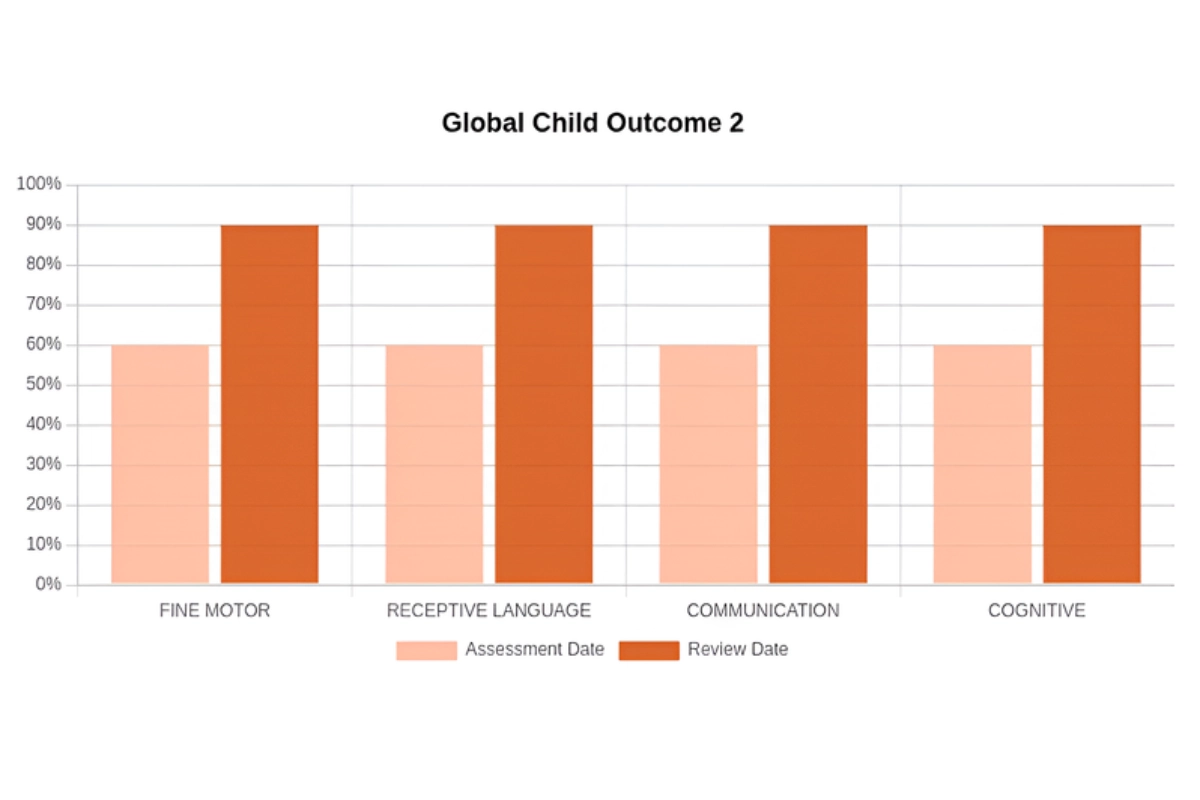
In an effective early intervention program, documentation isn’t just paperwork—it’s a map.
Because when you’re juggling behavior notes, IEP goals, progress checklists, and family updates—often across multiple children—it’s easy to feel lost in the day-to-day.
A clear, consistent record helps you get your bearings. It guides educators, therapists, and families toward each child’s goals and helps programs stay accountable, consistent, and responsive.
Tracking developmental progress matters for several reasons:
- It supports individualized education plans (IEPs) and informs strategy adjustments.
- It ensures compliance with regulations and funding requirements.
- It gives families visibility into what’s working—and where more support may be needed.
- It enables team members to collaborate using shared, up-to-date information.
For children with more complex needs, such as those on the autism spectrum, consistent reporting is even more vital.
When every milestone is documented and every small win is noticed, it’s easier to fine-tune interventions, build on strengths, and reduce frustration for everyone involved.
Where Traditional Systems Fall Short
Before digital tools, early intervention relied heavily on paper files, manual note-taking, and scattered communication between educators, therapists, and administrators.
While the intentions were always strong, the systems often weren’t.
Traditional systems create barriers such as:
- Delayed communication: A speech therapist’s update might take days to reach the classroom teacher—if it’s shared at all.
- Siloed documentation: Progress notes, IEP goals, and parent updates live in different places, making it difficult to get a clear picture of a child’s growth.
- Time-consuming reporting: Teachers and therapists spend hours writing summaries instead of engaging directly with children.
- Inconsistent follow-through: Without centralized tracking, critical interventions may be forgotten or duplicated.
These gaps don’t just slow things down—they can lead to missed opportunities, frustrated teams, and a lack of confidence from families.
Digital solutions offer a way forward—not to replace the human connection, but to support it with structure and visibility.
How Digital Tools Improve Early Intervention Outcomes

A strong early intervention program relies on collaboration.
But when each team member is working from a different notebook, spreadsheet, or app, things get lost—goals aren’t aligned, progress is hard to track.
Communication then becomes reactive instead of proactive.
Digital tools help unify the team around one shared purpose: supporting each child’s development in real, measurable ways.
Here’s how they support each role:
- Educators can easily see what goals are being targeted and incorporate them into daily routines—without needing extra paperwork or guesswork. Instead of wondering “Was speech therapy working on turn-taking today?”, they already know.
- Therapists gain real-time access to classroom observations, behavior logs, and teacher feedback. That means less repetition, more personalized therapy sessions, and stronger follow-through between sessions.
- Program Directors and Administrators benefit from centralized reporting, faster compliance checks, and data that supports decision-making—from staffing needs to service improvements.
- Families feel more connected and informed when they can log in and see their child’s progress, notes from educators, and even recommended home strategies. It builds trust—and turns them into true partners.
When everyone sees the same goals, the same updates, and the same progress—teams work better. Digital platforms don’t just reduce admin. They create clarity, consistency, and cohesion across the entire support system.
For Autism Support: Why Digital Systems Make a Difference
Children with autism, in particular, often benefit from highly structured environments, visual supports, and consistent feedback loops. Digital platforms make it easier to:
- Track behavioral data over time (e.g., meltdowns, triggers, progress on coping strategies)
- Log communication and social interaction milestones
- Support sensory needs with customizable profiles or strategies
- Share structured plans and routines across team members and settings
In short, digital tools help create the consistency and responsiveness that children with autism need to thrive in an early intervention setting.
Key Criteria to Consider When Choosing the Right Early Intervention Tech Solution

Not all digital tools are created equal.
The best ones fit seamlessly into your workflow, empower your team, and enhance—not complicate—the support you offer to families.
When evaluating a digital solution, look for:
- User-friendly interface for educators, therapists, and families
- Built-in screening tools and IEP support
- Real-time progress tracking and customizable goal dashboards
- Secure, centralized data that supports compliance
- Multilingual or culturally inclusive features
- Integration with your center’s routines, not disruption of them
- Support for autism-specific needs such as behavior tracking, visual schedules, and sensory accommodations
There are several digital platforms currently used across early intervention and preschool settings.
Tools like Lillio (formerly HiMama) and Brightwheel are popular for managing documentation and parent communication. Meanwhile, BRIGANCE Online Management System supports early childhood screenings and assessments.
For programs seeking an all-in-one digital early intervention platform, PEIVE offers integrated developmental assessments, IEP generation, video-based therapy resources, and progress dashboards that connect families, educators, and specialists.
Choosing the right tech is less about having the most features—and more about finding a system your team will actually use and benefit from.
Conclusion: A Better Early Intervention Program Starts with Better Tools
A strong early intervention program doesn’t just depend on passionate educators or qualified therapists—it depends on systems that support them.
Digital tools aren’t a shortcut. They’re a structure. One that frees up time, deepens collaboration, and ensures every child’s progress is visible, trackable, and celebrated.
If your team is stretched thin, your paperwork is piling up, or your communication feels scattered, it might be time to upgrade—not your people, but your tools.
Because better tools build better programs—and better programs change lives.