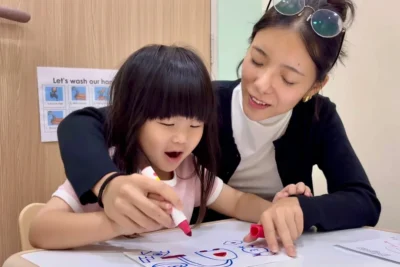



You’re standing in the kitchen after bedtime, the toys are finally put away—but your mind is racing. Your toddler still isn’t talking. You’ve read the blogs, tried the tips, waited patiently… and yet, that quiet lingers.
Or maybe you’re a teacher packing up after a long day, heart heavy with worry about the student who couldn’t follow a single routine—while your desk overflows with paperwork you barely touched.
Whether you’re a parent or an educator, you’ve likely asked yourself: Am I doing enough? Am I missing something important?
You’re not imagining it.
And you’re not alone in feeling overwhelmed, unsure, or even powerless when a child’s development doesn’t follow the expected path.
As a parent, caregiver, or educator, you already know that every child develops in their own way. It’s natural to notice differences in how and when those milestones appear.
Some children start speaking in full sentences before their third birthday. Others take a little longer to find their words, their balance, or their sense of ease in a busy classroom.
But when delays persist—or when your gut keeps nudging you that something’s not quite right—it’s time to stop guessing and start exploring.
This guide is here to walk alongside you.
We’ll explore what Early Intervention Programs (EIPs) are, why they matter, how they work, and how digital tools like PEIVE can make early support more accessible, personalised, and effective.
No judgment, just help—because early support changes everything.
What Is an Early Intervention Program?

An Early Intervention Program (EIP) is a structured set of services designed to support young children (typically from birth to age six) who are experiencing, or are at risk of experiencing, developmental delays.
These programs focus on key areas such as:
- Cognitive skills (problem-solving, attention)
- Receptive and expressive language (understanding and using words)
- Fine and gross motor skills (e.g., drawing or walking)
- Socio-emotional development (managing feelings, socialising)
- Adaptive/self-help skills (eating, dressing)
EIPs are often multidisciplinary, involving speech-language therapists, occupational therapists, physical therapists, developmental educators, and psychologists.
More importantly, these services are not just for children with a formal diagnosis. Many EIPs begin when concerns arise—long before a label is given.
Why Early Intervention Matters
Here’s the science: up to 90% of a child’s brain development happens by age five. This is a critical window where the foundations for learning, behavior, and health are being built.
According to the Centers for Disease Control and Prevention (CDC), intervening early not only helps children develop important skills sooner, it also improves long-term academic and social outcomes. Research further shows that children with early speech and language difficulties are more likely to face long-term challenges. For example, they are:
- 6 times more likely to fall behind in English by the time they’re 11
- 11 times more likely to struggle with Maths at the same age
- More likely to experience anxiety, low self-esteem, or other mental health difficulties
- Twice as likely to be unemployed as adults compared to peers who didn’t have language delays
That’s why early support matters so much. With the right intervention at the right time, many of these outcomes can be improved—or even prevented. Children who receive support early are more likely to:
- Communicate effectively
- Develop positive relationships
- Transition smoothly into school
- Achieve stronger academic outcomes
- Build emotional resilience and self-esteem
From a financial perspective, investing in early childhood programs can return $7 to $17 for every $1 spent (Heckman Equation), reducing future costs in education, health care, and in some cases, even the justice system.
Early Intervention vs. Special Education
You might hear both terms mentioned when talking about support for children with developmental needs, but knowing the difference between Early Intervention and Special Education can help you better understand what kind of support fits a child’s needs—and when.
Early Intervention typically kicks in from birth to around age six.
It’s proactive, aiming to support development during the critical early years, often before a formal diagnosis is even made. Services happen in natural environments like the home, preschool, or community settings, and they often involve a strong partnership with the family.
Special Education, on the other hand, usually starts once a child enters primary school.
It’s designed to support learning in more structured classroom settings and often focuses on adapting the school environment to meet the child’s needs.
Understanding this distinction helps you act with more confidence.
If you’re noticing signs before school age, Early Intervention can be the gentle starting point that brings clarity, support, and meaningful progress—right when it matters most.
Recognising the Signs: When Might a Child Need Early Intervention?
Parents and educators are often the first to notice something doesn’t feel quite right. Maybe a child:
- Doesn’t respond to their name
- Has limited vocabulary at age two
- Struggles with balance or coordination
- Has frequent meltdowns that seem hard to manage
These signs might seem small on their own, but when viewed in context, they could indicate a developmental delay.
Early screening tools (like those used in PEIVE’s digital assessment) can help determine if additional support is needed.
Common Myths & Misconceptions
Myth 1: “They’ll grow out of it.”
Truth: While every child develops at their own pace, consistent delays should not be ignored. Research shows that waiting to act can cause children to fall further behind, making it more difficult to catch up later. Early support provides the foundation they need to thrive.
Myth 2: “Only diagnosed children qualify.”
Truth: Many children benefit from early support long before a diagnosis is made. Early Intervention is designed to be accessible—families can seek guidance based on observed concerns, not just a formal label.
Myth 3: “Speaking more than one language confuses children.”
Truth: Multilingualism doesn’t cause delays, though it may influence how language emerges. In fact, bilingual children may develop language at a different pace, but this is not the same as a disorder. Professionals can help distinguish between the two.
Myth 4: “Intervention will label my child.”
Truth: Early help empowers your child; it doesn’t define them. Intervention is not about placing limits—it’s about unlocking potential and helping children access the support they need to succeed in their own way.
Early Intervention Methods & Techniques
If you’re wondering what early intervention actually looks like in practice, you’re not alone.
It’s not a one-size-fits-all model. Instead, it’s a toolkit of strategies shaped around your child’s (or student’s) unique strengths and challenges. Whether you’re a parent hoping to bring structure to your routines, or a professional looking to apply evidence-based methods, here are some of the most common techniques—and how they play out in real life:
Play-based Therapy
Children learn best through play, and therapists use this to their advantage.
A session might involve building a tower of blocks to improve motor planning and turn-taking, or role-playing with dolls to support emotional expression.
These activities are fun and engaging while being carefully structured to target specific developmental goals.
Parent coaching
Therapists work with caregivers to turn daily routines into opportunities for learning.
For example, brushing teeth can become a chance to build fine motor skills, and snack time might be used to practice requesting and naming.
Rather than relying solely on weekly sessions, this approach empowers families to support development all day long.
Speech, occupational, and physical therapy
Depending on a child’s needs, specialists may address communication, motor coordination, sensory integration, or muscle tone.
These sessions might include practicing syllables through song, developing core strength with obstacle courses, or using adaptive tools to support self-feeding.
ABA (Applied Behaviour Analysis) or DIR/Floortime
These evidence-based models are often used with children who have autism or social communication differences. ABA might involve step-by-step reinforcement of specific skills, while DIR/Floortime emphasizes emotional connection and child-led play to promote regulation and engagement.
Visual supports and routine-based interventions
Picture schedules, social stories, and visual cues can help children understand expectations and transitions.
For example, a visual timetable may reduce anxiety around school routines, while a step-by-step handwashing chart supports independence in hygiene.
PEIVE, for instance, brings these approaches to life through personalised IEP goals, step-by-step video guides, and downloadable handouts.
These tools help you not just learn the techniques—but confidently use them at home, in the classroom, or during therapy sessions. supported by tutorial videos and instructional handouts.
These resources help both parents and professionals apply these techniques in ways that are structured, consistent, and achievable, no matter the setting with tutorial videos and handouts for parents and professionals to use at home or in schools.
Parent & Family Support

After everything we’ve explored so far, one thing is clear: your role as a parent or caregiver is not just important—it’s essential.
You play a powerful role in a child’s growth.
As a parent, caregiver, or family member, you’re not just part of the support system—you’re the heart of it. The everyday things you do—comforting after a tantrum, guiding little hands to zip up a jacket, cheering on a first word—these moments matter deeply.
Research shows that children make greater progress when families are involved in early intervention.
And this doesn’t mean becoming a therapist—it means being empowered with the right tools and guidance to build on what you’re already doing with love and intention.
Family-centered support can look like:
- Learning how to gently manage specific behaviors using strategies that fit your routines
- Incorporating therapeutic activities into daily life, like mealtimes, bedtime, or play
- Feeling seen and supported as you navigate uncertainty or decision-making
Cultural & Linguistic Considerations
If you’re raising your child in a multilingual or culturally rich household, you may sometimes wonder: Is this delay because we speak more than one language at home? Is it okay that our parenting style looks a little different from others?
These are valid and common questions—and they deserve thoughtful support, not quick assumptions.
You might notice your child mixes words from different languages or takes longer to speak than peers in single-language homes.
You may have family traditions that influence how emotions are expressed or how independence is encouraged.
None of this is “wrong”—in fact, it’s a strength.
Effective early intervention embraces these differences. That means:
- Using tools and assessments designed with multilingual families in mind
- Respecting cultural norms, such as how children are comforted, disciplined, or taught to interact
- Offering support in your preferred language whenever possible, so nothing gets lost in translation
In diverse communities like Singapore, this kind of inclusion isn’t just helpful—it’s essential.
That’s why PEIVE offers multilingual prompts, regionally relevant resources, and a flexible approach that honours your family’s values and voice.
Barriers & Challenges in Early Intervention

Unfortunately, accessing early support isn’t always easy.
Even when parents, teachers, or caregivers notice a concern, several barriers can delay or complicate the process:
- Long waitlists for therapists – Many families wait months for an appointment, which can be stressful and discouraging. In those waiting months, a child might miss key windows for early learning and progress.
- Limited awareness among caregivers or teachers – It’s common to assume a child will “catch up” or that delays are just a phase. But sometimes, those early signs are clues that extra support could make a world of difference.
- High administrative burden on professionals – For educators and therapists, valuable time is often spent on paperwork, reports, and progress tracking. This can reduce the time and energy they have to focus on meaningful, direct work with children.
- Financial and time constraints for families – Weekly therapy sessions can be expensive, and arranging transportation or time off work isn’t always possible. Some families may also be caring for other children or elderly relatives, making scheduling even harder.
This is where technology steps in. Digital platforms like PEIVE can bridge these gaps by offering:
- Immediate assessments
- Time-saving progress tracking
- Remote collaboration among therapists, teachers, and parents.
How to Choose the Right Early Intervention Program
Choosing the right early intervention program can feel overwhelming—especially when you want to make sure you’re giving your child the best possible support.
The truth is, the “right” program isn’t the same for every family.
It’s about finding one that meets your child’s needs and works within your everyday life.
Here are a few key things to look for:
- Clear communication and parent inclusion – A strong program should see you as a partner, not just an observer. Are you invited to participate in setting goals? Do professionals explain strategies in a way that makes sense to you?
- Evidence-based methods – Look for programs grounded in proven techniques. Ask what approaches they use, and how they tailor those to fit each child.
- Developmentally appropriate goals – Goals should be personalised, realistic, and achievable. You want a program that understands where your child is right now and helps them build skills one step at a time.
- Tools for tracking progress – Progress shouldn’t be a mystery. Whether through regular updates, visual trackers, or digital dashboards, it’s important to see how things are going and what’s improving.
- Cultural and linguistic relevance – Does the program respect your family’s language and traditions? Can it adapt to your household routines or communication style? Feeling seen and understood makes a difference in how well a plan works.
Don’t be afraid to ask questions or request a trial.
You deserve to feel confident in the choice you’re making. More than anything, the right program should leave you feeling supported, not overwhelmed—and empowered to play an active role in your child’s journey.
Getting Started with PEIVE
Every child develops differently—but sometimes, delays can go unnoticed until it’s too late.
The earlier you act, the more support they get when it matters most. PEIVE is here to help you take action with clarity, confidence, and care.
Here’s how it works in three simple steps:
Step 1
Take a quick 5-minute Pre-Programme Survey to help us understand your child’s context and your goals.
Step 2
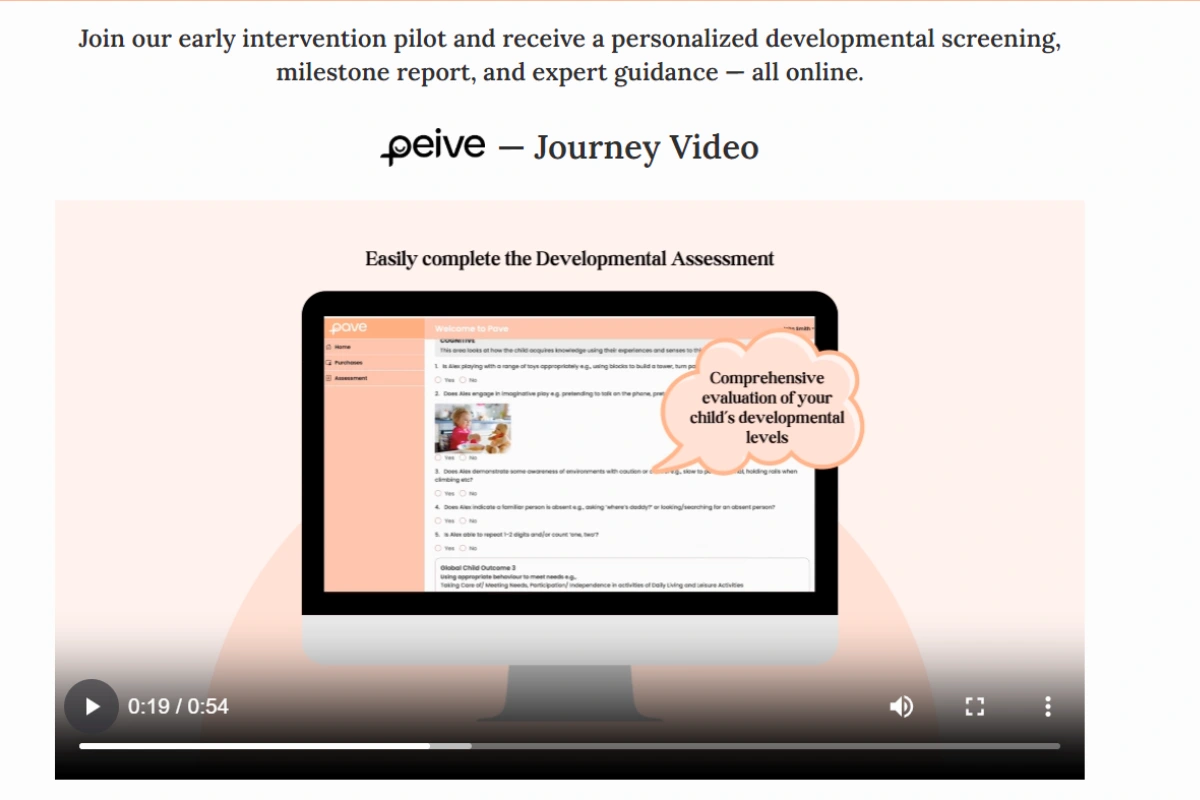
Complete your personalized Developmental Assessment—designed by child development experts—and get your results immediately.
Step 3
Receive expert-backed guidance and support, including personalized IEP goals, video tutorials, handouts, and real-time progress tracking.
PEIVE’s platform is intuitive, flexible, and family-friendly. You don’t need to be a specialist to use it—you just need to care (and if you’ve read this far, you already do).
If you’re ready to better support a child’s development, there’s no better time to start.